India’s Smart City AI Townships: Kerala & Karnataka
Key Pointers:
Smart Cities 2.0: India is building its first "AI Townships" where Artificial Intelligence manages city life from day one, not just as an add-on later.
Kerala's First Move: Kerala is planning the country's first AI township near Kochi. It will have smart traffic lights, automatic waste collection, and AI-based healthcare.
Karnataka's Big Plan: A massive "work-live-play" city called the Greater Bengaluru Integrated Township (GBIT) is being built near Bidadi to reduce traffic and crowds in Bengaluru.
Proactive, Not Reactive: Unlike normal cities that fix problems after they happen, these AI townships use data to predict issues like traffic jams or power cuts before they occur.
Global Race: India is joining countries like the UAE, China, and Saudi Arabia in using AI to redesign how cities function.
Table of Contents:
What is India’s AI-powered township, and how does it work?
The Birth of Kerala’s First AI Township
How does an AI-powered township differ from a traditional township in India?
Karnataka’s Vision: Greater Bengaluru Integrated Township
How India Compares Globally in the AI City Race
Opportunities: Innovation Meets Urban Necessity
Challenges: Data, Privacy, and Cultural Adaptation
Which companies or startups are leading AI township projects in India?
Execution and Sustainability: The Real Test
The Road Ahead
FAQs
India is entering a new phase of urban transformation with the rise of AI-driven township projects in Kerala and Karnataka. These developments reflect how Artificial Intelligence is moving beyond tech labs into everyday city life. As part of India’s broader Smart City vision and the growing momentum of AI in India, these townships aim to improve governance, sustainability, and quality of life through intelligent systems.
What is India’s AI-powered township, and how does it work?
An AI-powered township in India is a planned urban area where artificial intelligence is built into city systems from the beginning, not added later. These townships use AI to manage daily services such as traffic movement, waste collection, energy usage, healthcare access, and public safety.
AI works by collecting data through sensors, cameras, and digital platforms. This data is analysed in real time to help city systems respond automatically—for example, adjusting traffic signals during peak hours or optimising electricity use based on demand.
The Birth of Kerala’s First AI Township
On September 30, the Kerala government, in collaboration with InfoPark, announced plans for the state’s first AI Township under the long-term Kochi 2030 vision. Located in Kizhakkambalam near Kochi, the project is planned as a compact, technology-first urban ecosystem.
Unlike traditional IT parks, this AI-powered integrated township is designed to function as a complete community where living, working, and recreation coexist seamlessly.
Key features include:
Intelligent traffic systems: AI-enabled tools to optimise traffic flow and reduce congestion within and around the township.
Automated waste management: Smart monitoring and segregation systems to support cleaner, healthier surroundings.
Smart power usage: AI-based energy management to reduce consumption and support sustainability.
AI-based healthcare and education: Data-driven healthcare services and personalised learning platforms.
Spread across 300 acres, this AI-driven township brings together homes, offices, and green spaces in one integrated layout.
Expected outcomes:
2 Lakh Jobs: Large-scale employment generation across technology, services, and support sectors.
Kerala Growth: Increased investments and innovation-led economic expansion.
Urban Innovation: Positioning Kochi as a leading centre for AI-led Urban Innovation in India.
How does an AI-powered township differ from a traditional township in India?
Traditional townships rely heavily on manual management and fixed infrastructure systems. In contrast, AI-powered townships are data-driven and adaptive.
Key differences:
Predictive systems instead of reactive systems: AI-powered townships can identify issues like traffic congestion and energy demand early, allowing action to be taken before problems arise.
Automation of city services: Traffic control, waste management, and energy distribution are managed automatically rather than manually.
Data-backed decision-making: Real-time data replaces static planning models, improving efficiency and long-term sustainability.
This shift makes AI-powered townships more efficient, flexible, and sustainable over time. While Kerala’s AI township focuses on compact, integrated development, Karnataka is planning a much larger AI-led urban expansion.
Also Read: AI Misidentifies Chip Bag as Gun at Kenwood High School
Karnataka’s Vision: Greater Bengaluru Integrated Township
Karnataka is planning a much larger AI-led urban expansion through the Greater Bengaluru Integrated Township (GBIT) near Bidadi town. Announced in September 2024, this project represents one of the most ambitious Smart City initiatives in the state. The township is designed as an AI-powered “work-live-play” city, with Artificial Intelligence embedded into infrastructure from the planning stage itself.
Key objectives:
Reducing pressure on Bengaluru: Decentralising economic activity to ease congestion and infrastructure stress.
Supporting AI-driven industries: Creating a strong ecosystem for AI-driven industries and future-focused employment.
Creating integrated residential zones: Well-planned residential zones with community facilities for balanced urban living.
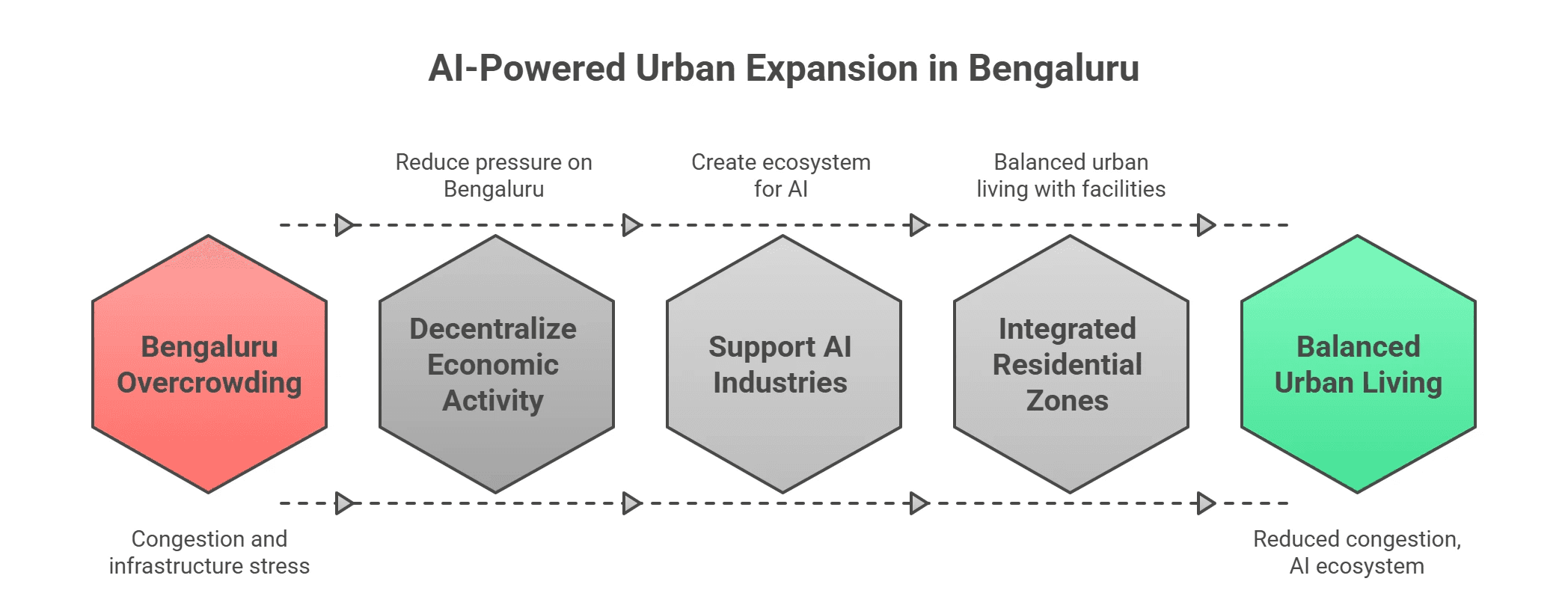
By embedding AI into education, healthcare, housing units, and public services, the project reflects a shift toward smart city planning rather than retrofitting technology later.
How India Compares Globally in the AI City Race
India’s AI-powered townships are part of a global trend where countries are using Artificial Intelligence to redesign cities.
UAE: The UAE is developing AI-driven smart districts where technology manages transportation, security, and sustainability automatically, improving efficiency and safety.
China: China is deploying pilot zones where AI controls traffic, supports law enforcement, and manages utility grids such as electricity and water with minimal human intervention.
Saudi Arabia: Saudi Arabia’s NEOM project envisions a large AI-integrated megacity where technology shapes every aspect of urban living.
By pursuing projects like the Greater Bengaluru Integrated Township (GBIT) and Kerala’s AI Township, India is positioning itself alongside these global experiments while adapting AI solutions to local needs.
Opportunities: Innovation Meets Urban Necessity
AI-powered Smart City projects offer solutions to long-standing urban challenges in India. By combining Artificial Intelligence, data platforms, and automation, cities can function more efficiently and sustainably.
Potential benefits include:
Better traffic management and reduced traffic congestion: AI systems can manage traffic flow in real time, improving mobility across major roads and townships.
More efficient waste collection and segregation: Smart sensors and automated systems improve waste handling and urban cleanliness.
Real-time monitoring of pollution levels: Intelligent systems help track emissions and air quality, enabling quicker action.
Smarter energy distribution across residential zones and commercial areas: AI balances energy use dynamically, reducing wastage and supporting eco-friendly design.
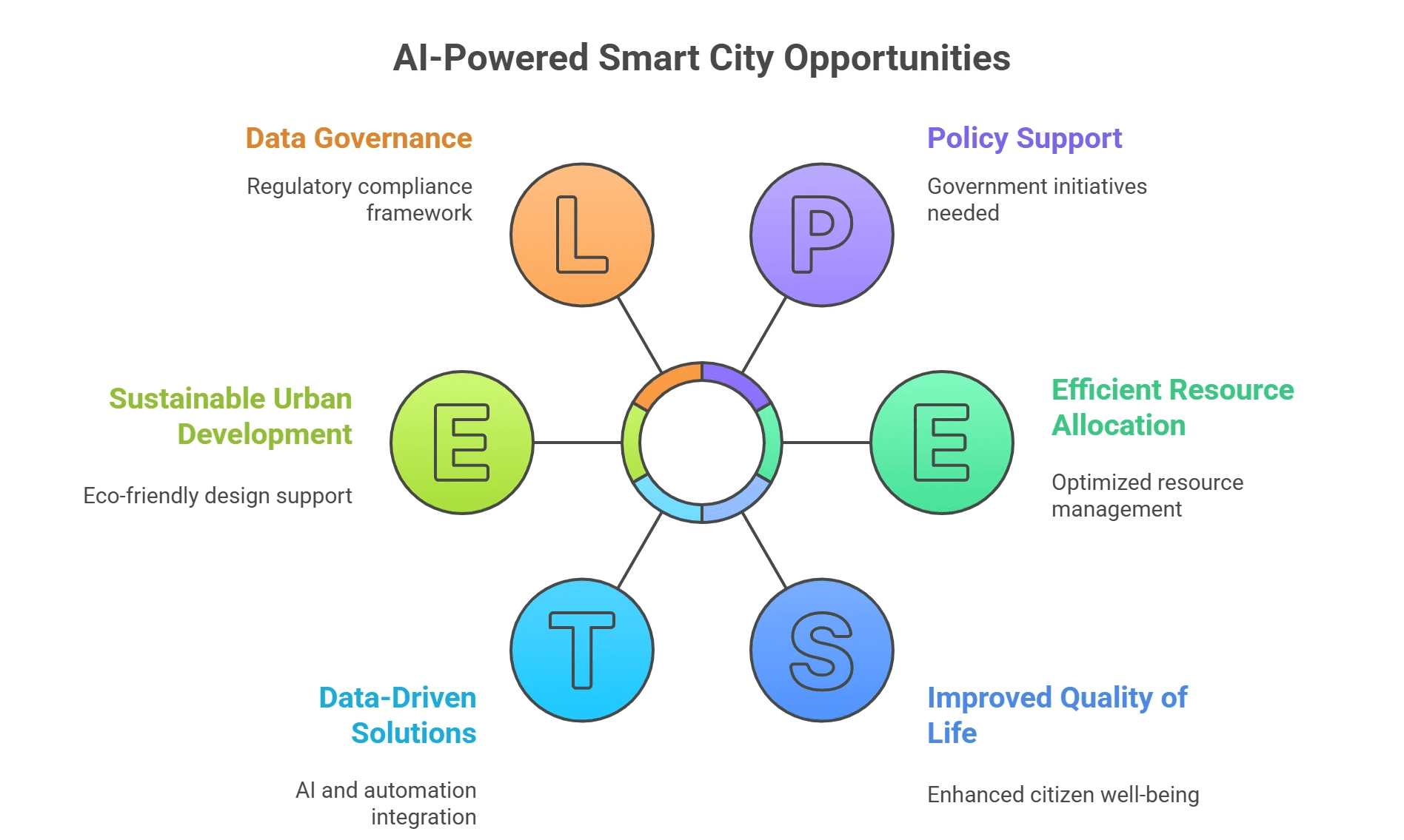
These innovations help build AI-powered integrated townships that respond quickly to citizens’ needs while supporting long-term sustainability.
Also Read: Grokipedia Controversy: Elon's AI Encyclopedia Under Fire
Challenges: Data, Privacy, and Cultural Adaptation
Despite the promise of AI-driven township development, AI-led Smart City ecosystems raise important concerns. As cities move toward AI-native city models supported by a central digital platform or urban city brain, trust and accountability become critical.
Key challenges include:
Data ownership and privacy protection: Continuous data generation raises questions about consent, control, and transparency.
Cybersecurity risks and system reliability: AI-managed infrastructure must be protected against failures and digital threats.
Trust in AI-based decision-making: Citizens need confidence that AI systems used in healthcare, mobility, and governance are fair and explainable.
There is also a cultural dimension. Indian cities are deeply human and community-driven, and adapting to AI-managed services will require time, awareness, and public trust.
Which companies or startups are leading AI township projects in India?
AI township projects in India are typically driven by public–private partnerships rather than a single company.
Key contributors include:
State governments and urban development authorities
Technology firms providing AI platforms and analytics
Infrastructure and real estate developers
Startups specialising in smart mobility, energy management, and urban data systems
Together, these stakeholders shape the AI-powered urban ecosystem.
Execution and Sustainability: The Real Test
Vision alone will not guarantee success. Even globally, large AI cities face delays and execution challenges. For Kerala and Karnataka, implementation will determine whether these projects become models or missed opportunities.
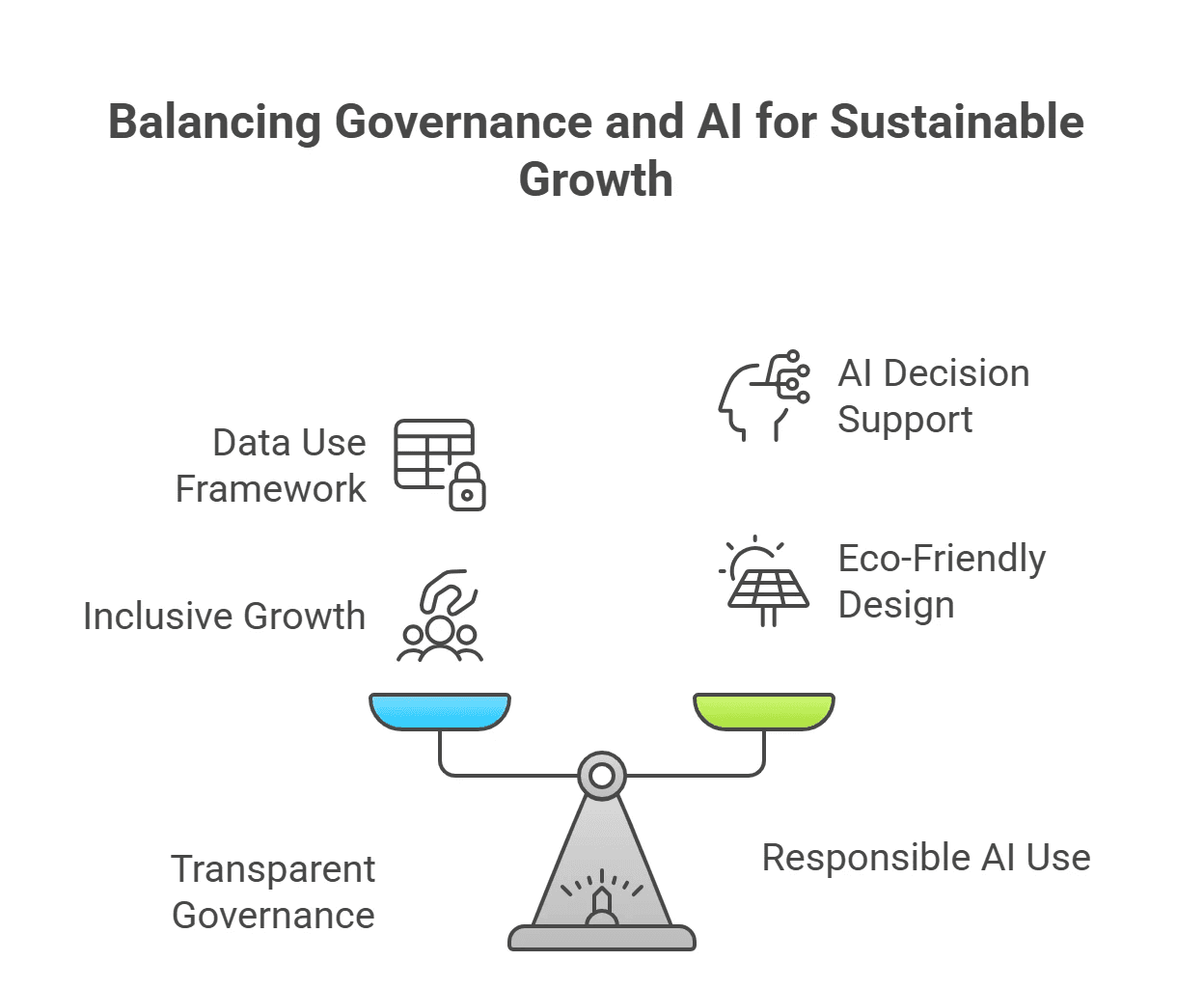
Success will depend on:
Transparent governance and clear regulations: Strong frameworks for data use, land planning, and public accountability.
Responsible use of Artificial Intelligence: AI should support human decision-making, not replace it.
Long-term environmental and social sustainability: Inclusive growth, eco-friendly design, and resilient infrastructure must remain central.
Also Read: The Rise of Deepfake: How Grok AI Fueled the Scandal
The Road Ahead
If executed thoughtfully, these AI Townships could redefine India’s Smart City journey. By balancing technology with human values, Kerala and Karnataka can demonstrate how AI in India can create cities that are efficient, inclusive, and future-ready.
India has officially entered the era of AI-powered urban development. Whether these townships become global benchmarks will depend not just on technology, but on how society grows alongside it.
FAQs
Which is the first AI-powered township in India?
India does not yet have a fully operational AI-powered township. However, the AI Township planned in Kizhakkambalam, Kochi, announced by the Kerala government in September 2024, is considered India’s first planned AI-powered township, with Artificial Intelligence integrated into urban services from the design stage itself.
Which city is called the AI City in India?
There is currently no officially designated “AI City” in India. That said, Bengaluru is often informally referred to as India’s AI hub due to its strong presence of AI startups, research institutions, and technology companies. Kochi is also emerging as a future AI-focused city with its upcoming AI township.
Which is the first AI village in India?
Panchgrami in Maharashtra is widely recognised as India’s first AI-enabled village, where Artificial Intelligence is used in areas such as agriculture, local governance, and public services to improve rural development.
Is Kochi building an AI town?
Yes. Kochi is developing an AI-powered township in Kizhakkambalam as part of the Kochi 2030 vision. The project aims to use Artificial Intelligence for traffic management, waste handling, energy efficiency, healthcare, and education, positioning Kochi as a key centre for AI-led urban development in India.